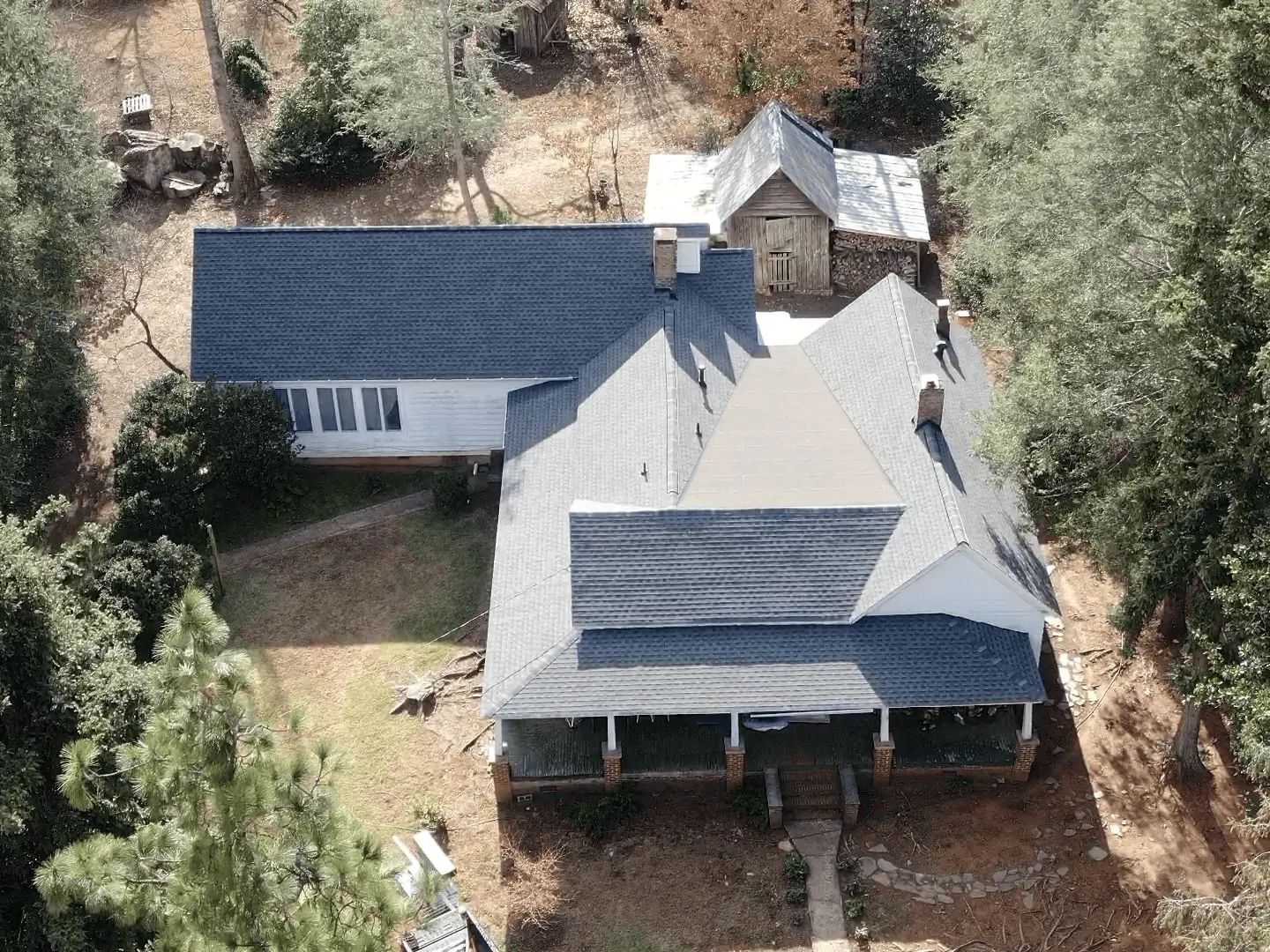
Roof Repair in Lawrenceville, GA: Finding the Real Problem, Not Just the Symptom
A roof leak never starts exactly where you see the stain on your ceiling. Water travels — along the decking, around penetrations, down framing — before it finally shows up inside. That's why rushed repairs fail. Someone patches the visible spot and leaves the actual entry point untouched.
At Legacy Roofing, we inspect the problem area and the surrounding roof sections, the flashing details, the valleys, and the attic when conditions call for it. We want to fix the cause, not buy you a few more months. Call us at (678) 431-4574 to schedule an inspection.
Common Roof Repairs We Handle
Roof Leaks
Leaks are the most common call we get. Sometimes the source is obvious — a cracked vent boot, a missing shingle after a storm. More often it takes a careful inspection to trace the water back to its actual entry point. We look at flashing, penetrations, valleys, ridge areas, and transitions where different sections of the roof meet.
Missing or Damaged Shingles
Wind, debris, and age all take a toll. If the surrounding roof is still in good shape, replacing the damaged section often extends the life of the system and prevents water intrusion from getting established. We match materials as closely as possible and make sure the repair ties in properly with the existing surface.
Flashing Failures
Chimneys, skylights, vent pipes, and roof-to-wall transitions all depend on properly installed flashing. When it separates, corrodes, or was never done right in the first place, leaks follow. We rebuild these details correctly — not just reseal over a problem that will resurface.
Storm Damage
Georgia's spring and summer storm seasons are hard on roofs. High winds can lift or crack shingles. Hail damages shingle granules in ways that aren't always visible from the ground but compromise the material underneath. Falling branches puncture surfaces or dislodge flashing. We assess the full extent of storm damage, document it properly, and repair what needs repairing. If the damage is significant enough to involve your insurance, we handle that process too — see our insurance claims page.
Flashing Around Chimneys and Skylights
These are among the most failure-prone areas on any roof. The transition between a vertical surface and the roof plane is where water likes to find its way in. If you're getting leaks near a chimney or skylight, flashing is the first place we look.
Ventilation-Related Wear
Sometimes the shingles aren't the only issue. A poorly ventilated attic traps heat in Georgia's summers — temperatures can exceed 150°F — which bakes shingles from below and shortens their life considerably. If ventilation is contributing to premature wear, we address that as part of the repair rather than just replacing surface material.
Repair or Replace? Our Honest Take
Not every homeowner who calls about a leak needs a new roof. One of the most valuable things we can do is tell you when replacement isn't necessary.
Repairs make sense when the damage is limited, the rest of the roof still has good life left, and the underlying structure is sound. That may be a storm-damaged section, a flashing failure at one penetration, or a localized leak that hasn't spread.
There are also situations where repairs have become a losing proposition — when the roof is aging out, problems are showing up in multiple areas, or the decking has been compromised by long-term moisture. If that's what we find, we'll say so. But we don't start there by default, and we don't push replacements on roofs that still have useful life.
Why Homeowners in Greater Atlanta Call Legacy Roofing
Roof repair takes judgment. It's not just replacing a few pieces and moving on. You have to read the whole system and understand how the failure happened in the first place.
We do our own inspections and our own work. The same people who diagnose the problem fix it — no handoff to a subcontractor who wasn't there when we found the issue. That keeps things clean and prevents the communication gaps that lead to repeat problems.
We also care about how the repair looks when it's done. We match materials as closely as possible and aim for work that blends into the existing roof rather than drawing attention to itself.
Frequently Asked Questions About Roof Repair
How quickly should I get a roof leak repaired?
As soon as possible. Even a slow leak causes more damage the longer it sits. Water travels along rafters and decking before it shows up as a stain on your ceiling, which means by the time you see it inside, the damage above is often larger than expected. Mold can begin forming in as little as 24 to 48 hours in Georgia's humidity. The earlier you get it inspected, the better chance you have of keeping the repair small and the cost manageable.
Can you repair just one section of my roof?
Yes, in many cases. If the damage is genuinely isolated — a few shingles after a storm, a failed flashing seal around a chimney, a cracked vent boot — a sectional repair is absolutely the right approach. We look at whether the surrounding materials are still sound and whether the issue is truly contained before recommending repair vs. a broader scope. If a localized fix will hold, we'll do that.
What does a roof repair typically cost in the Atlanta area?
Smaller repairs — replacing a handful of shingles, resealing flashing, or fixing a single leak — generally run between a few hundred dollars and $1,500, depending on what's involved. More complex work like replacing a larger shingle section, rebuilding flashing around a chimney, or repairing decking damage underneath costs more. Every roof is different, so we give you a detailed quote after the inspection, not a guess over the phone.
Will repaired shingles match the rest of my roof?
We match materials as closely as possible, but a perfect visual match isn't always realistic. Shingles fade and weather over time, so even the same product from the same manufacturer may look slightly different next to shingles that have been on the roof for ten years. We'll be honest about what the finished repair will look like before we start.
Do you inspect the attic during roof repairs?
When conditions suggest it, yes. The attic often shows signs of problems that aren't obvious from the roof surface — moisture staining on rafters, mold growth, deteriorating insulation, or areas where light is coming through. That information helps us understand how long a leak has been going on and whether the damage extends beyond what's visible outside.
What are the most common causes of roof leaks in Georgia?
Flashing failures are the most common cause we see — particularly around chimneys, skylights, pipe boots, and roof-to-wall transitions. Storm damage from Georgia's spring and summer thunderstorms accounts for a significant portion: missing or lifted shingles, punctures from falling branches, and hail impact that compromises shingle integrity without being obvious from the ground. Age-related wear — shingles that have dried out and cracked after years of Georgia heat and UV exposure — is the other big one.
How do you find where a roof is actually leaking?
A roof leak rarely starts exactly where you see the water inside. Water enters at one point, travels along the decking or framing, and drips somewhere else entirely. We start at the stain or wet spot, then work our way up and outward — checking flashing, penetrations, valleys, and shingle condition in the vicinity. The goal is to find where the water is actually getting in, not just patch the obvious spot and hope it holds.
What happens if you find more damage than expected during a repair?
We stop and explain it before doing anything additional. If we pull back a section and find rotted decking, deeper moisture damage, or a flashing failure that's larger than it appeared, we'll show you what we found and walk through your options. No surprise line items after the fact. You make the call on how to proceed with full information.
Can storm damage to my roof be repaired without a full replacement?
Often, yes. If a storm damaged a specific section while the rest of the roof is still in decent shape, a targeted repair is usually the right move. That might mean replacing shingles in one area, rebuilding flashing that took a hit, or fixing a penetration that got damaged by debris. If the storm exposed bigger underlying problems, we'll be honest that the math on repair vs. replacement has changed.